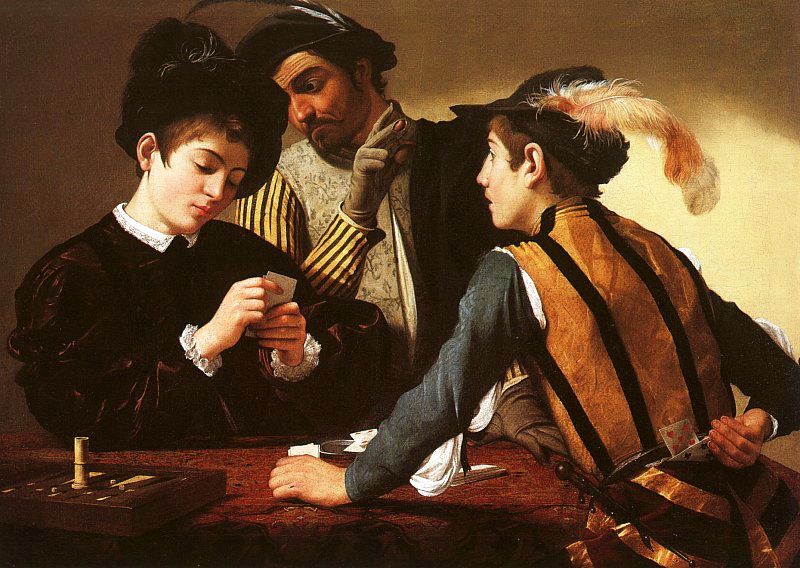
The human race is one filled with gamblers and it seems it's always been this way! The very first gambling accounts were recorded around 2300 B.C. in China. The wagering of valuables in games of chance was also popular in Ancient Greece, despite the fact it was illegal. This mere technicality failed to halt such activities then, as it does today in countries around the world in which gambling is officially banned today.
The basis of so many of today's favourite gambling games such as Blackjack and Poker - are also thought to have been inventend in mighty China or even in nearby ancient India. It was sometime around 900 A.D. as the Chinese came up with the idea when they began shuffling paper money (yes, another Chinese invention) into various combinations. The strong connection to the Orient continues today, with the general Chinese term for playing cards translating to "paper tickets". The contemporary 52-card deck - used in US today - was originally reffered to as the "French Pack" (somewhere in the 1600's). This pack was adopted as which was later adopted by the English and subsequently the Americans.
Dice have beeen fascinating people and making them richer or poorer for over 2,000 years. Even the language of dice follows history. When Caesar made his ctritical decision to take his victorious army across the Rubicon against the edict of Rome, he took his retort from the lexicon of the dice player "Iacta alea est." The die is cast. History shows that game called Hazard was played by the most fashionable men of 18th and 19th century England. They rolled dice in luxurious private gambling houses and bet everything from coins to the family silver.
The Frenc learned the game from the English and called it Craps, a corruption of Crabs, the name for a pair of ones. When Europeans arrived in the Americas and other settled countries throughout the world, they brought their dice with them. As dice were rolled on riverboats, wharfs and in private houses, a simplified Americanised version of Craps developed. The popular game moved west with the fronntier, adding extra colour to thr nightlife of pioneers. Today it's played in homes and clubs across the country.
Legal or not, it's a part of american heritage. In 1776, sanctioned by the infant goverment of the US, legal gambling was used in a variety of ways to raise money for a young country. Two centuries later, the US government allwed casinos only in Nevada and one lottery in New Hampshire. However, in les than the next twenty years, gambling revenues had risen to $ 329.9 billion, an amazing 1900 percent increase! Gambling was legal out West from the 1850's to 1910, at which time Nevada made it a fellony to operate a gambling game.
In 1931, Nevada re-legalized casino gambling where Blackjack became one of the primary games of chance offered to gamblers. The world today recognizes the gambling dray card of Las Vegas as readily as any American icon and the glitz and glamour of that city has made it into many a Hollywood movie.



 What we know today as Bingo is a form of lottery and called a direct descendant of Lo Giuoco del Lotto d'Italia that was organized in 16th century and is still going strong. The European game of lotto, which had special playing cards with rows of numbers, had a caller who read numbers out loud. Players would cover the number if it appeared od their cards and the firstplayer to complete a horizontal row was deemed the winner.